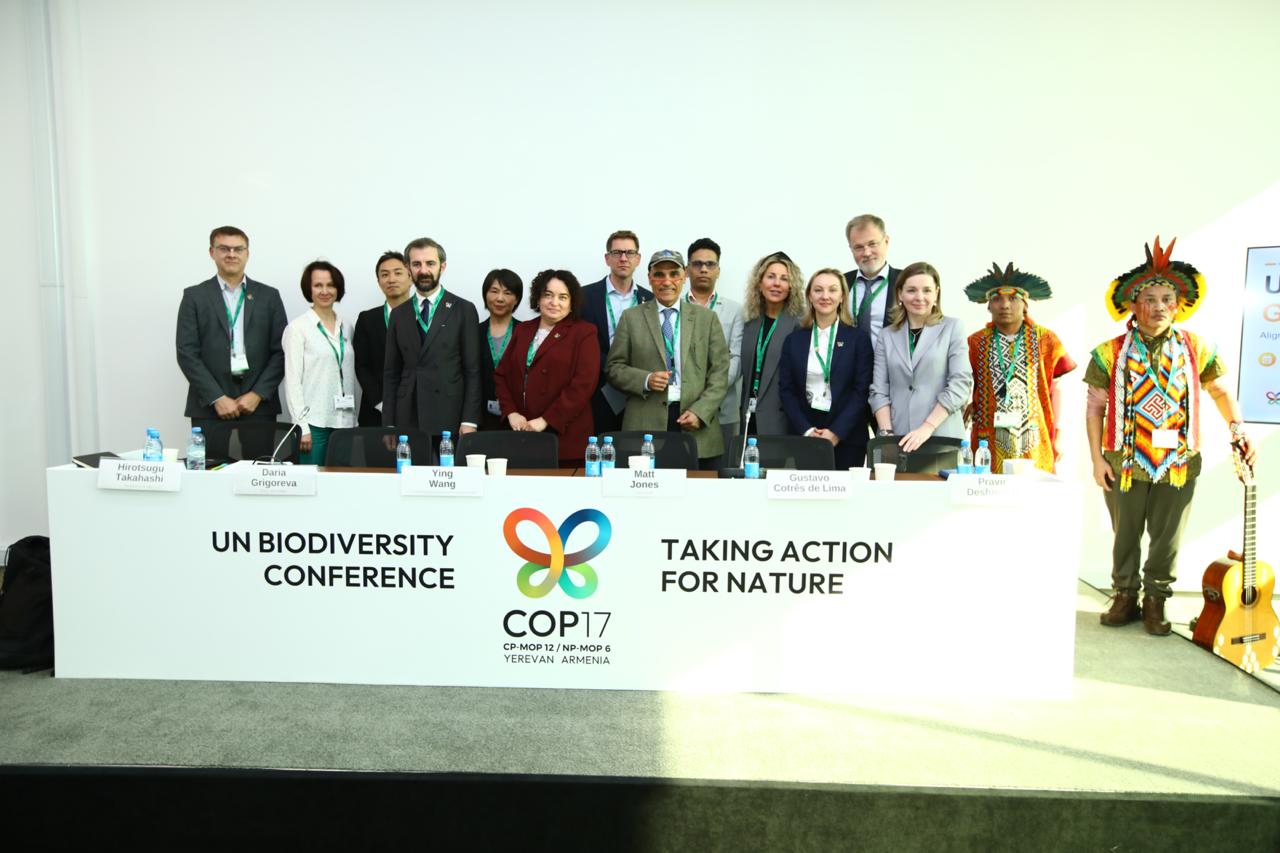
Yerevan, 26 October 2026. The ESG Alliance, Polyus and Kept held One Taxonomy, Global Partnership, a side event at the 17th meeting of the Conference of the Parties to the Convention on Biological Diversity. The speakers presented a Russian classification of corporate biodiversity projects and a biodiversity risk assessment methodology, examined company experience and discussed what it would take to make national approaches more comparable internationally.
“We organized this side event to show the international community the growing engagement of Russian businesses in biodiversity. We also wanted to share the approaches we have developed and the results achieved, and make clear that we are open to working with international partners,” said Elena Groznaya, Deputy CEO of the ESG Alliance.
For business, this conversation is closely connected to Target 15 of the Kunming–Montreal Global Biodiversity Framework, which calls for large companies and financial institutions to assess and disclose their risks, dependencies and impacts on nature. Yet similar conservation projects may still be described and assessed differently across countries and sectors. That makes it harder to see what action has been taken, what it has achieved and whether the results can be compared.
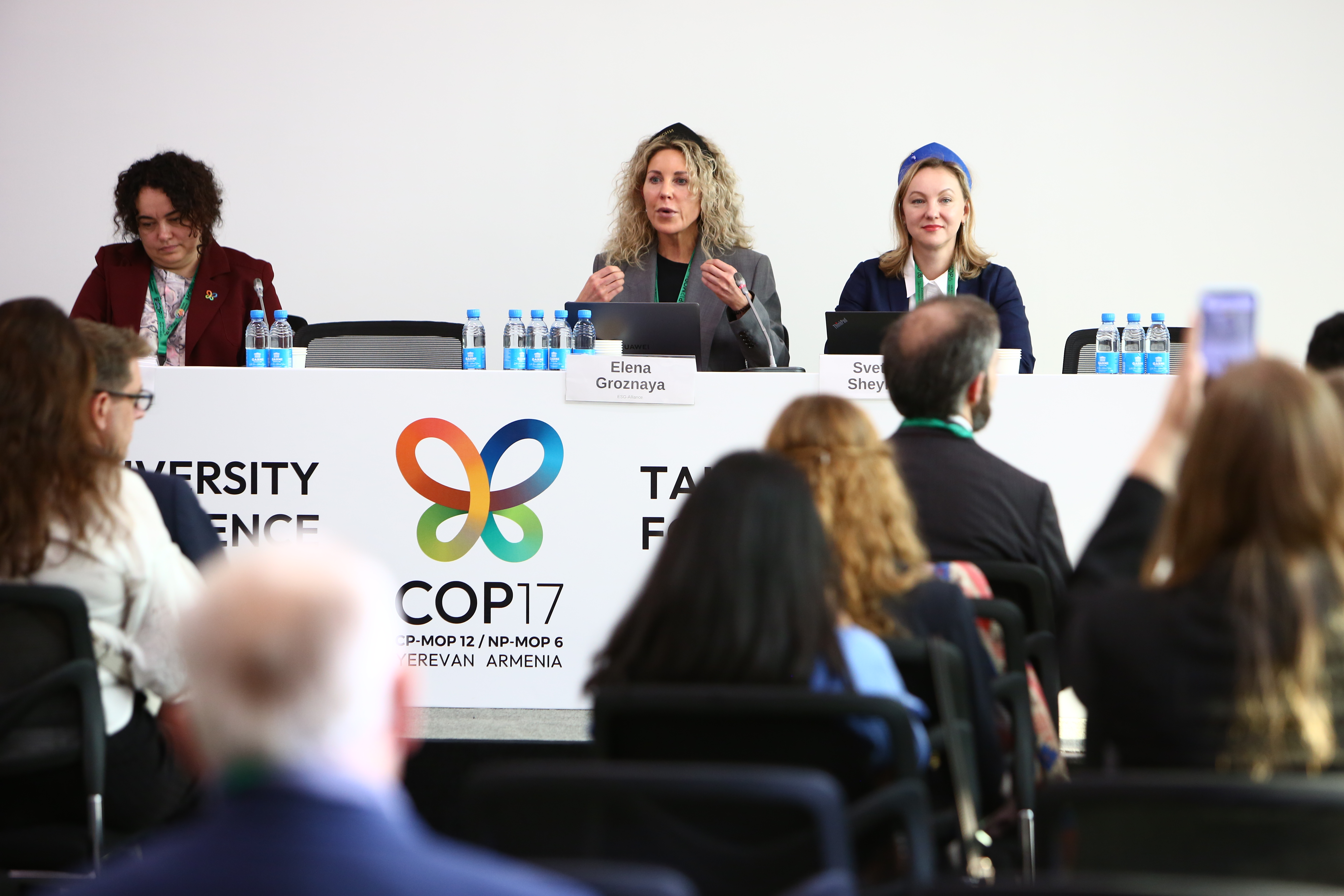
The classification presented by the Alliance organizes corporate biodiversity projects into nine classes. It helps companies identify the type of project, describe its intended outcome and relate it to international and Russian biodiversity priorities.
Elena Groznaya, Deputy CEO of the ESG Alliance, presented the Alliance’s analytical mapping of project types against the Global Biodiversity Framework targets.
“We mapped every project type in our classification against the 23 targets of the Kunming–Montreal Global Biodiversity Framework. Our analysis shows a direct link to ten targets — including ecosystem restoration, the ‘30 by 30’ goal and Target 15, which calls on large companies to assess and disclose their impacts on nature. A further seven targets are addressed in part.
The remaining six fall outside the scope of the classification. Many of the issues they address require government action and cannot be resolved through corporate projects alone. Grounded in international standards and Russian regulation, the classification helps show where business can contribute to the global biodiversity agenda — and where other mechanisms are needed,” Groznaya said.
All of Polyus' corporate biodiversity conservation projects have been filtered through our classifier. We are particularly interested in the project efficiency evaluation methodology: we apply it across all our sites, including when designing environmental initiatives for our growth projects, such as Sukhoi Log. This helps us not only review current initiatives but also understand from the very outset what biodiversity conservation measures need to be planned for new assets," said Daria Grigorieva, Sustainability Director at Polyus.
The second instrument is a biodiversity risk assessment methodology developed by the Alliance with technical support from Kept. It assesses risks associated with a company’s own operations and provides for the evaluation of project quality, performance and effectiveness. It draws on both international approaches and Russian data and requirements. Svetlana Sheynfeld, Director at Kept, emphasized why a baseline matters:
“Performance tracks whether a project is actually delivering results. The assessment compares three values — the baseline before the project started, the current value, and the planned target.”
The methodology is still being tested and refined. Its current scope focuses on companies’ own operations; upstream and downstream value chains are outside it.
The corporate panel examined how a common system of description and assessment can work across sectors, including petrochemicals, energy, transport and mining.
“For many companies today, biodiversity is evolving from a simple environmental topic into a key element of competitive strategy. However, biodiversity conservation activities should not be used solely as a competitive advantage — rather, they should become a shared asset. The classifier and risk assessment methodology developed by the ESG Alliance are excellent tools that will help companies synchronize their activities and provide an opportunity to objectively compare projects. This is especially important and useful given the specifics of different industries,” said Nadezhda Galaktionova, Sustainability Director at SIBUR.
Dmitry Pavlov of En+ Group described a management use for the classification: “The application of this taxonomy is not just a reporting or compliance exercise, it’s a strategic creation tool.” He said that applying it can help the company identify areas that have received less attention, including noise mitigation and assessment of its footprint on nature.
Maxim Polishchuk, Deputy Head of the Department of Environmental and Technosphere Safety at Russian Railways, described a project in the Lake Baikal area of Irkutsk Region. Russian Railways assisted in establishing a protected area of approximately 79 hectares to help conserve endangered birds and a distinctive natural complex. “The project was rated at 98 points out of 100,” he said. According to Polishchuk, the classification also helps the company organize its projects and substantiate funding for future conservation work.
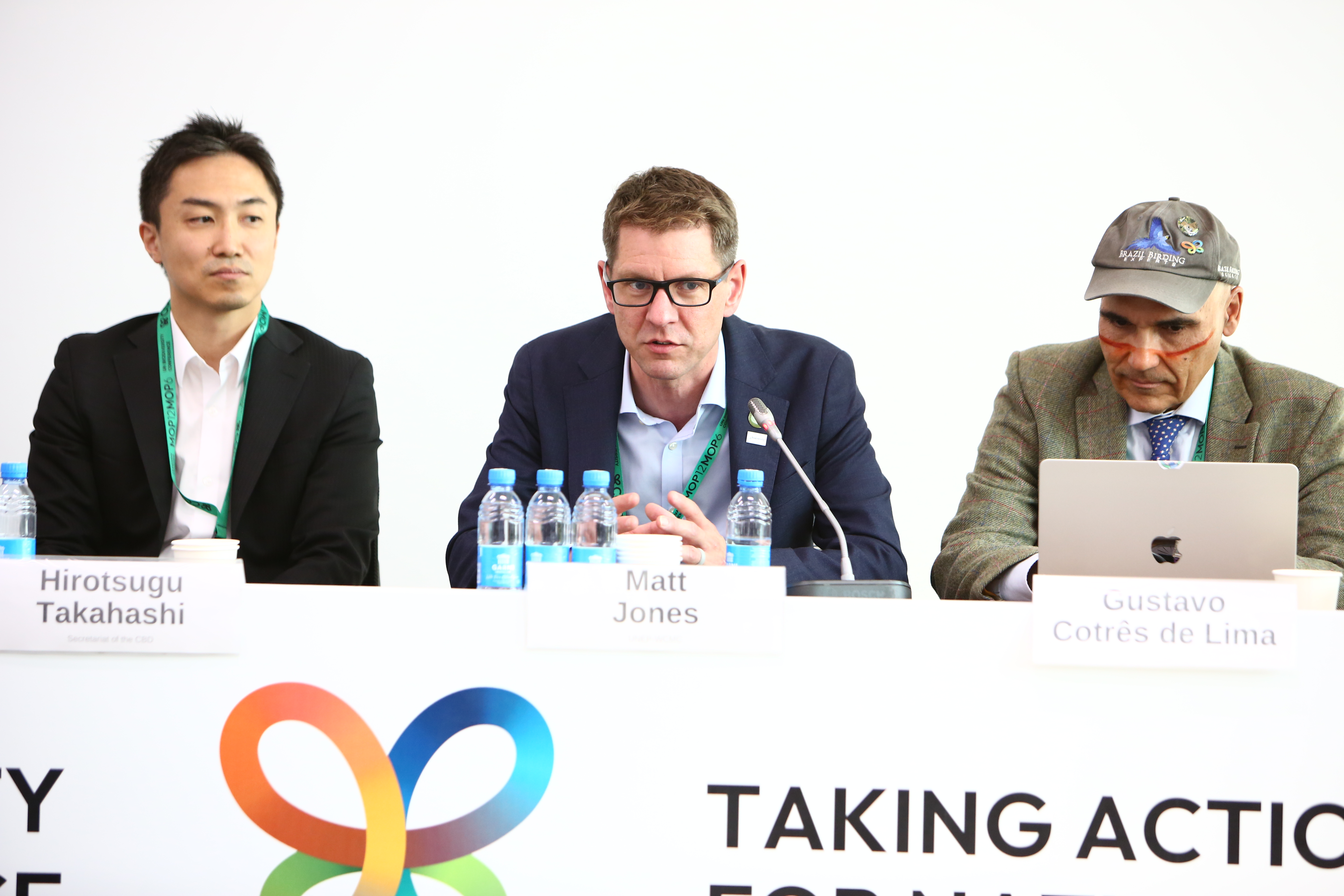
The second part of the session considered how national systems might work together. Experts from international organizations and representatives of China, India and Brazil discussed comparability as a practical question: for a project assessed in one country to be understood in another, partners need to know what was measured and what evidence supports the reported result.
Matt Jones of UNEP-WCMC, co-chair of the IPBES Business and Biodiversity Assessment, emphasized that companies can act beyond their own project portfolios: “There is a significant role that business can play like influencing others. They can influence government, they can influence their peers, and they can influence within their value chain. And do also, they can help contribute to an enabling environment.”
Ye Wang described China’s approaches to biodiversity finance and regional pilots. Pravir Deshmukh of the Confederation of Indian Industry explained how its initiative works with companies of different sizes and how businesses can understand their dependence on ecosystem services through concrete operating costs. Gustavo Cortes de Lima of Brazil pointed to opportunities for cooperation among institutions, companies and universities.
The discussion did not establish a single classification for BRICS countries. It explored a more immediate question: which elements of national systems could be compared so that projects described and assessed in one country can be understood by partners in another?
The ESG Alliance is open to continuing the dialogue with national business initiatives, companies and international experts on comparable approaches and opportunities for cooperation within the Convention on Biological Diversity process.


